English. Lamb is the traditional main course on Italian Easter tables. But, to be honest, lamb is quite a popular food all over the world, from the Mediterranean countries to India, from North Africa to South America, in the Anglo-Saxon countries, from Ireland to Australia. We could say that lamb dishes are "globals", the perfect crossing among many peoples.
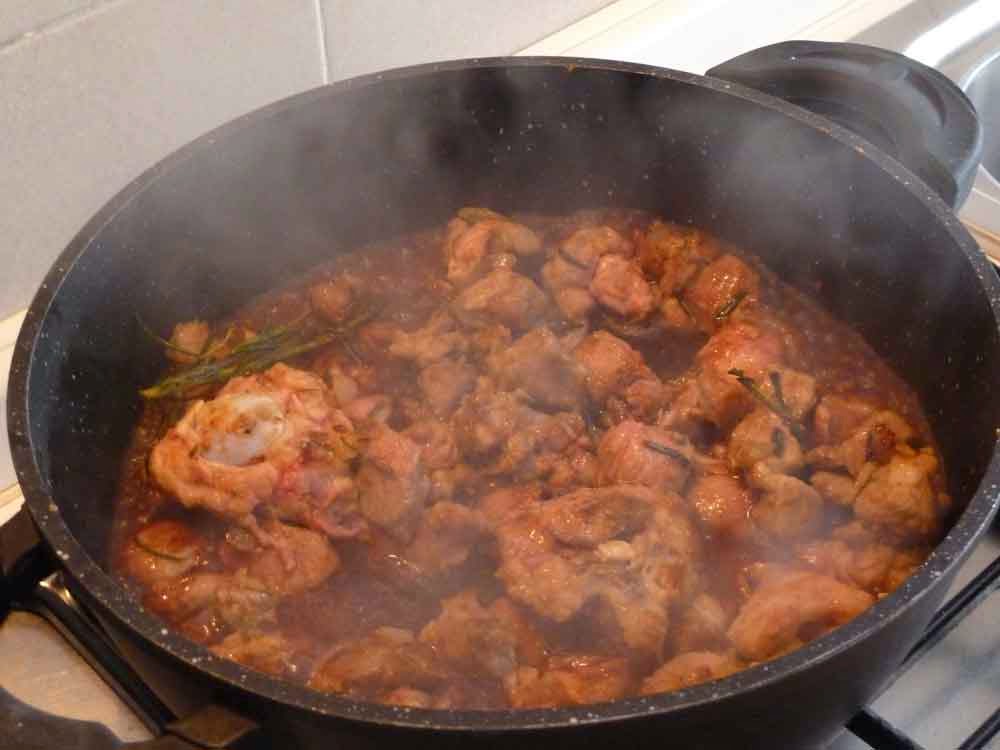
In Italy people use to roast lamb, in the oven or on bbq, but we as Cuoche Clandestine really wanted to prepare something different, something that would express the globalization of the lamb: so was born the lamb stew in red wine, with spices and aromatic herbs.
Español. El cordero es un clásico en las mesas italianas en Pascua . A decir la verdad , el cordero ès un clásico en llas mesas de medio mundo, desde el Mediterráneo hasta la India, desde el Norte de África a América del Sur, los países anglosajones, de Irlanda a Australia. El plato de cordero ès un plato "global", encrucijada de muchos pueblos.
Aquí en Italia, la tradición lo quiere cocinado asado, al horno o a la parrilla. Las "Cocinera Clandestina" (nostras) hemos pensado preparar un plato que exprese la "globalidad" de este manjar, entonces ha nacido, el estofado de cordero con vino tinto, aromatizado con especias y hierbas.
English. We set aside a fancy cous-cous, yellow coloured - thanks to the turmeric - with some typical mediterranean spring vegetables: asparagus, fava beans, peas , artichokes, spring onions.
Español. Lo hemos acompañado con cous cous colorado de amarillo con cúrcuma y sazonado con las verduras típicas de la primavera: espárragos, haba, guisantes, alcachofas, cebollas.
English. We were very satisfied with our recipe and you will agree with us looking at the picture above: it looks really gorgeous, isn't it? That's an Easter dish, elegant and simple at the same time, fresh and tasty. Happy holidays to everybody and enjoy your meal!
Español. Hemos quedado muy satisfechas con nuestra receta, ustedes estarán de acuerdo con nosotras mirando la foto de arriba, se ve muy bien! Un plato digno de una mesa de Pascua, elegante y simple al mismo tiempo, fresco y sabroso. Felices fiestas a todos y disfruten!
Serves: 4 - ingredientes para 4 personas
- 400 g lamb meat - 400 g de cordero en trosos
- 30 g fava beans - 30 g de habas
- 50 g peas - 50 g de guisantes
- 50 g asparagus - 50 g de puntas de espárragos
- 50 g finely chopped artichokes - 50 g de alcachofas cortadas finas
- 4 spring onions - 4 cebollines
- 200 g quick-cook cous cous - 200 g de cuscùs de cocciòn ràpida
- 200 g boiling water - 200 g de agua caliente
- 1 tablespoon turmeric - 1 cucharadita de cùrcuma en polvo
- half a glass of red wine - medio vaso de vino tinto
- spices* - especias*
- two thyme and rosemary sprigs - dos ramitos de tomillo y romero
- sea salt, black pepper, extravirgin olive oil to taste - sal, pimienta, aceite de oliva
* we chose half a teaspoon each of: hot paprika, mustard seeds, coriander seeds, cinnamon and turmeric, 3 cloves, 2 cardamom pods.
*hemos utilizado la mitad de una cucharadita de cada uno: pimentón fuerte, semillas de mostaza, semillas de cilantro, canela y cúrcuma, 3 clavos de olor, 2 vainas de cardamomo.
Difficulty: medium - Time: 1 hour and 15 minutes
Dificultad: media - Tiempo: 1 hora y 15 minutos
English. Grind the spices in a mortar (unless you have chosen all powders, it's surely faster!). Peel peas and fava beans and weigh the necessary quantity; clean the asparagus and take only 50 g of the more tender parts; clean the artichokes and dice 50 g very thin; dice lamb into chunks, taking apart a couple of bones to give flavour to the stew. Finely slice two spring onions.
Español. Machacar las especias en un mortero (a menos que halla elegido todas las especias polvo, lo que facilitará el proceso!). Pelar y pesar los guisantes y las habas pesando la cantidad requerida; limpiar los espárragos y tener sólo 50 g de las partes más tiernas, limpiar l50 g de alcachofas y rebanar muy delgada, cortar en trozos la carne de cordero. Cortar dos cebollines en rodajas finas.
English. Put three tablespoons of flour in a plastic bag, add the lamb pieces and shake vigorously: in this way the meat will be evenly floured and you can easily remove flour surplus.
Español. Pongan tres cucharadas de harina en una bolsa de plástico, poner en el interior el cordero cortado en cubos y agitar enérgicamente: de èsta manera la carne se enharina uniformemente y se puede quitar fácilmente el exceso de harina.
English. In a large pan put 6 tablespoons of olive oil and saute the chopped onions along with the mixed spice, thyme and rosemary.
Español. En 6 cucharadas de aceite, rehogar la cebolla picada junto con la pimienta de Jamaica, el tomillo y el romero.
English. Add the lamb and brown it, then pour half a glass of wine.
Español. Añadir el cordero y hacerlo "tostar" un poco y luego verter medio vaso de vino.
English. When the alcohol evaporates, add a cup of water and let the stew simmer for 50 minutes on low heat. If while cooking you notice that the lamb is too dry, add some water.
Español. Cuando el alcohol se haya evaporado, agregar una taza de agua y cocinar el estofado por 50 minutos a fuego lento. Si durante la cocción se dará cuenta de que el cordero es demasiado seco, añada más agua para terminar de cocinar.
English. Meanwhile, let's prepare the cous cous. Put 200 grams of water on the fire and take it off when boiling. Melt the tablespoon of turmeric powder in boiling and salted water, then add a tablespoon of oil. Put the cous cous in a bowl and put the water inside. Stir for a while, then cover the bowl with a plate or a lid and let the cous cous rest (cook the cous cous accordingly to the instruction on the packaging).
Español. Mientras tanto, preparar el cous cous (cuscùs). Ponga a hervir 200 gramos de agua. Derretir la cucharada de cúrcuma en polvo en agua hirviendo, salar con la mitad de una cucharadita de sal, a continuación, añadir el cuscús y una cucharada de aceite. Cubrir con un plato y dejar reposar el cuscús y absorba toda el agua. De vez en cuando, mezclar con un tenedor para desgranar los granos.

English. Now we have to cook the vegetables. Chop the two remaining onions and brown them in a pan, then add all the vegetables except asparagus. Add a few tablespoons of water to braise the vegetables: be careful because they have not to boil. Use just a little quantity of water, to prevent that vegetables burn, but at the same time they have absolutely not to boil: this action is called brazing.
Español. Mientras tanto, cocer las verduras. Picar los dos cebollines restantes y dorarlos en una sartén, a continuación, agregar todas las verduras excepto los espárragos. Añadir unas cucharadas de agua para estofar las verduras: tenga cuidado que no hiervan. El agua debe ser poca, justo para que las verduras no se quemen, però al mismo tiempo no deben ser hervidas: de hecho la acción se llama estofar.
English. After ten minutes add the asparagus and cook for five minutes more. At that point the vegetables should be ready: taste it. If they are a bit crunchy they are ok: pay attention not to overcook.
Español. Después de diez minutos, añadir los espárragos y cocinar otros cinco minutos. En ese momento, las verduras deben estar listas: probarlas. Si son un poco crujientes son ok: no las hagan cocinar demasiado.
English. When the vegetables are ready, mix them to the cous cous. Stir well to mix everything, then prepare the cups you are going to turn upside down on a plate next to the stew when it's ready, just like in the image below. Do you like it? It's so gorgeous and it's quite tasty, really! Enjoy!!
Español. Cuando las verduras estén listas, añadirlas al cous cous. Revuelva bien para mezclar todo, luego preparar las copas que se van a volcar en un plato junto al estofado cuando esté listo, para presentar un plato perfecto.